
Automatic Irrigation System using Arduino
By Sheshathiri
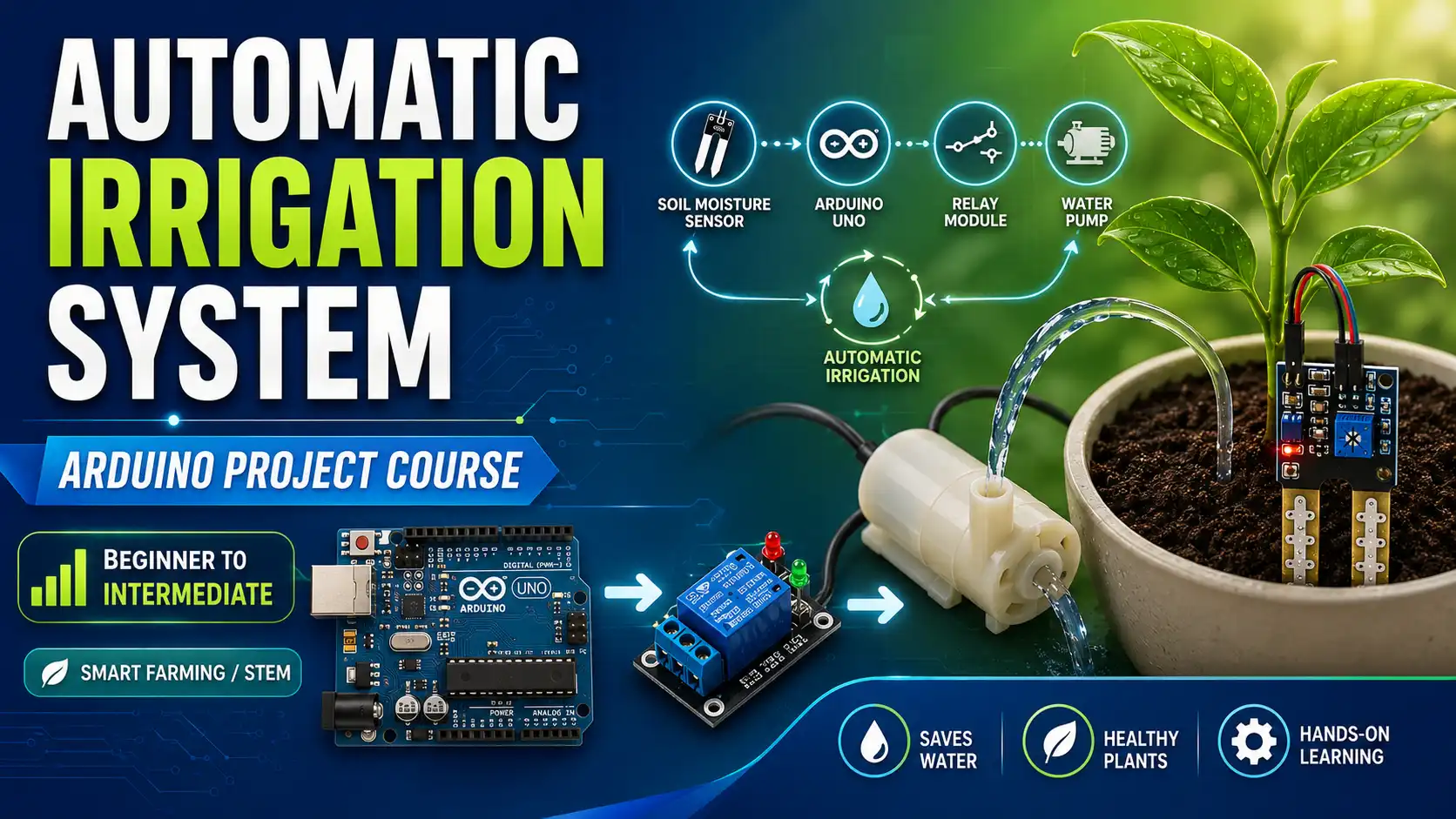
Course content
9 modules · 9 lessons · enrol to unlock all lessons
Students learn the basic idea of smart irrigation, why automatic watering is useful, and where it is used in agriculture, home gardening, and IoT projects.
Students learn each component used in the project and its function.
Students connect the soil moisture sensor to Arduino and read analog moisture values.
Students learn how Arduino controls a high-current pump using a relay module.
The water pump is the output device of the Automatic Irrigation System. Its job is to move water from a container to the plant. The pump needs more current than the Arduino can provide, so we use an external power supply and relay module.
Students write Arduino code to check soil moisture and control the relay automatically.
After testing the soil moisture sensor and relay separately, we can combine both into one complete program
Students test the full system and adjust the moisture threshold for correct automatic watering.
In this final lesson, students complete the full Automatic Irrigation System and present their working project. The goal is not only to build the circuit but also to explain how the system works.
Explore more with IDRO
Compare courses, STEM kits, lab options and demo support before choosing a learning path.